Monday, January 16, 2023

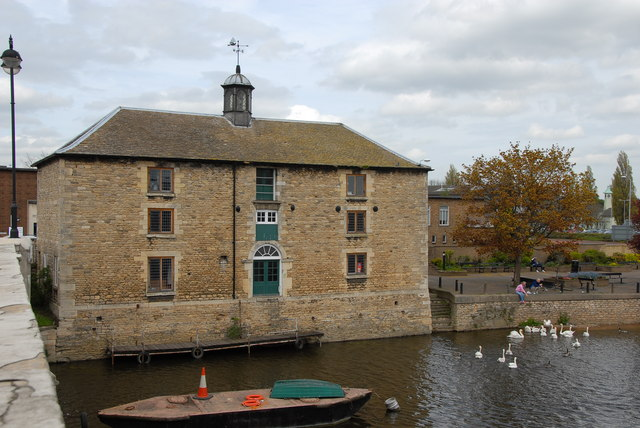
A View of the Squires

Image by Julian Dowse

Arriving at Peterborough bridge from the south in the late eighteenth and early nineteenth century you would have been dazzled by the wealth of the Squires. They not only owned the countryside that you had just travelled through south of the Nene, but they owned the two buildings you were about to pass between like two enormous gatehouses into the city. As if that wasn’t enough, they also controlled the river that you were standing above and many of the buildings in the city too. You were in Squire country.

The building to the right of the bridge is, thankfully, still standing and is still as delightful as ever. It’s currently known as the Customs House or Old Customs House and is used by the local Sea Cadet unit. References in documents and books show it has had different names over the years including the Wharf and later Old Wharf. The construction date of the building is hugely debated, with 1790 being the most common belief, but early eighteenth century stated on the official listing (grade II). I have it on good authority that the original plans of the building exist with the correct date somewhere between the two and will report back when I have seen it!


The building to the left of the bridge, known as Bridge House, was sadly destroyed to make way for the Rivergate complex. For older Peterborough citizens, they would have walked or driven past Bridge House, or even been in it as a shop, and not realised that they were passing by a significant Georgian mansion as featured in the painting of the Squire children in Peterborough Museum (always worth a visit to see it in person).


https://artuk.org/discover/artworks/wright-thomas-squire-d-1811-and-his-sister-charlotte-on-a-black-pony-50134


In its glory it would have looked incredible overlooking the Nene and the town bridge. South-facing, the honey-coloured ashlar sandstone façade would have appeared to glow in the summer sun and provided an excellent vista for a visitor arriving to the city, whether by land or water.


The family who lived there were hugely influential and, as you might imagine, had lots of business connections across the city and beyond. Wright Squire appears to have been the first of the Squire family to move to the city, although his father or another relative might have preceded him. He had been married to a woman called Ann, but tragically he lost Ann in 1751 and also his daughters Ann and Elizabeth. Wright married again and wed Mary Campin at St John's by licence in 1761. They had three sons; Wright Thomas Squire, (also known as both Wright and Thomas) who worked alongside his brother William as merchants, and their youngest brother John. I haven't been able to find a huge amount of information about John. In Wright's will of 1790 he left his property, lands and goods to Wright Thomas and William, but money to John and Mary. Another son Matthew died in 1779.


Wright Thomas and William continued the family mercantile business and were exceedingly fortunately placed when the decision was made to build the Norman Cross Prisoner of War Camp. It was the Squire family who met all of the camp's needs and Wright Thomas who mustered the officers who were staying in the city. And it was on their land – Squire Close – that the new arrivals for the camp disembarked and walked to their new prison. There are some great books on the camp, so I won't elaborate any further here.


Wright Thomas married Lucy Bigland in the city in 1778. The Biglands were a big deal in the city. Lucy's father loved to race his horses at the Peterborough Races and would compete against a William Squire and other landed gentry. Sadly Lucy’s father had died when she was only five years old. Lucy had only sisters, but their name and reputation would have had weight, as well as her 3,000 guinea dowry! If you’re doubting the importance of the Biglands because you’ve never heard of them, it might be worth knowing that they were descended from the Orme and Kennet families and you’ve possibly walked over them, because they have a ledger stones in the new building in the cathedral.


Wright and Lucy had five children; Lucy was born in 1780 followed by Mary Anna, Wright Thomas, William Walcot and Charlotte Sarah in 1791. Wright Thomas and Charlotte are the two children who feature in the portrait atop a horse in the museum. If you’ve heard of any of the Squires it is probably Charlotte, who was briefly married to Thomas Alderson Cooke, but she was the least significant of the Squire offspring. Wright Thomas – the heir to the Squire empire – sadly died in 1810, leaving wife Mary and two small children Fanny Eliza and William Thomas.


Wright Thomas senior had died in 1802, so William Walcot suddenly found himself as head of his family. He had thankfully been working with his father and uncle and appears to have been already involved in the running of their joint ventures. Wright Thomas junior had died without a will which ended up causing an argument in the family as William and William Walcot were taken to court by Lucy (sister-in-law and mother) on behalf of her grandchildren. They squabbled over land and money, Lucy being determined to ensure that her infant grandchildren weren’t left without, after a lengthy and expensive court case.


The Squires were involved in a variety of businesses and lots of different parts of city life. Not only did they run Squire and Co, which was split into ‘Wine and Ale’ (including a significant brewery and lots of pubs), and mercantile elements, but they ran the Peterborough Bank too. William, Wright and Wright Thomas (as it was written) were all on the board of Improvement Commissioners when it was first created, Wright Thomas being only 18 or 19 at the time and the role being one for life.


You’re probably wondering why you haven’t heard of the Squires and why their names have almost vanished from the city when others have remained. Something I am investigating is the level of animosity between the Cookes and the Squires after Thomas and Charlotte’s marriage was annulled. William Walcot had married Julia Cooke shortly before Thomas and Charlotte's wedding and later wills etc. showed a deep connection across the families and that they still relied and trusted each other, but I’m not convinced that William had any time for his father-in-law. Any event that William supported, Thomas stayed away from and vice versa. This could simply be a coincidence or that the men had differing interests, but when these are subscriptions for books and charities, it does seem a little strange.


The main reason they’ve vanished from the city consciousness is because William Walcot sold up in the late 1830s. All of his businesses and concerns were sold on or passed to business associates. All of the land he owned (everything he could have seen from his front door and more, which was a vast amount) was sold off in portions for properties and small pastures. He sold off the brewery, the river tolls (he was forced to in the 1820s following the case against his nephew and niece), his mercantile business, and his house and contents. He moved, with whatever he had remaining, and started a new life in Cheltenham, in a beautiful house that is now a B&B! It was a slow decline, but the death of his uncle John in 1834 does seem to spur him on to leave the city.


With Wright Thomas already dead and buried in St John’s, there was no one left with the Squire name. Lucy had married John Turner Hale and lived in Norfolk. Charlotte, being covered in the stench of a failed marriage and the fact she was unable to have children, never married again and was therefore living at the will of her brother. There are no clues as to where she goes between her annulment and the first census, but she does spend the last few decades of her life in Cheltenham, a short distance from William and Julia.


Mary Anna was, it could be argued, the most successfully married of all the Squires. She caught the eye of Charles Mansfield Clarke, a noted surgeon from a family of surgeons specialising in obstetrics. He was later awarded a baronetcy, after attending to Queen Adelaide, elevating Charles to Sir and Mary to Lady! Their children and grandchildren continued to marry well, with a nod to the family history popping up in the name of their great grandson Sir Orme Bigland Clarke, the 4th Baronet. Orme married Elfrida Roosevelt, (yes, of THAT Roosevelt family) meaning that any descendants have the pedigree of centuries of British and American heritage in their blood.


As an additional fact it’s worth mentioning that Mary Anna left her own personal memory of her life in Peterborough. Before she married, she painted an image from the front of Bridge House. It captured the life that she could see from her window and details the bridge over the river, people possibly waiting for a boat to Wisbech and horses and wagons going about their business. As artwork goes it is certainly not the work of a great master, but it is honest and original and provides us with the view from Bridge House that I alluded to earlier. I won’t reproduce it here, but you can find it in the Pitkin book on Peterborough or on the back cover of Peterborough Through Time by June and Vernon Bull. The image has always been attributed to MA Squire but I am possibly the first person to publicly name Mary Ann as the correct artist. Hunt it out and enjoy it, and remember the family that’s all but vanished from the city.

Thursday, January 5, 2023

Inkhambridge


To someone with a background in both history and linguistics when I came across the name Inkhambridge in Peterborough records I was rather excited. The word appeared so incongruous with other Peterborough place names, and yet so perfectly placed historically and geographically ('inkham' or 'ingham' is such a great word to find in an area where most place names end in -ton). I had questions, specifically where Inkhambridge was, and I started looking for answers.

What Was the First Reference?

The earliest reference I have found to Inkhambridge was from a charter relating to the parish church (St John) and guild lands of Peterborough (1) and dated to 1355 which refers to ‘two acres of arable land lying in the fields of Peterborough at Inkhambridge adjoining the King’s highway known as Botolphgate.’

In another charter from the same collection (2) from 3 March 1381-82 there is a reference to ‘two acres of arable land situate at Inkhambridge in the fields of Peterborough adjoining the public way leading from Inkhambridge to Boongate.’

Where Were These  Locations?

Botolphgate was the name of the road that went past the hamlet of Botolphsbridge or Bottlebridge, which is now known as Oundle Road, Woodston. The hamlet had at one time a ford and/or bridge across the Nene close to where Nene Valley’s Fletton Junction is between Botolph Green and the rowing lake over the river. Earlier maps and archaeological digs (EEA Report 153 on Botolph Bridge) have shown how Botolphgate had been diverted from its earlier route, which made a gentle curve towards a crossing close to the location of the Key Theatre, meeting up with what is now Vineyard Road, east of the Cathedral.

Boongate, or Bondgate, was the name of the settlement to the east of the abbey which was close to Roman Car Dyke and predates the abbey/cathedral. Evidence of Bronze Age and Roman remains were found in the cathedral grounds and in the area of Boongate.

In present day Peterborough, Oundle Road meets London Road and crosses the river directly north onto Bridge Street. A bridge was first built there in 1308, so it was in place in the first reference to Inkhambridge in 1355, but from a linguistic point of view the location of Inkhambridge had to predate the 'new' bridge. 

What Can the Name of the Location Tell Us? 

Inkhambridge is an unusual name and likely to be a variant of Ingham Bridge (try saying them with a Scandinavian or German accent and see how similar the g and k sound). The ‘ingham’ part of the name is Anglo Saxon in origin, possibly dating from the 6th century, if not earlier, and therefore pre-dating the abbey, which was founded in 6553. The name refers to a homestead and is common across England but tightly concentrated in Norfolk and Suffolk4. As you might expect from an early Anglo Saxon word, there aren't many 'inghams' in the fens or indeed around Peterborough, which makes this name in this location all the more interesting.

So Where Was Inkhambridge?

Joining together the two references, Inkhambridge was probably a bridge or crossing of the Nene where the embankment is now and would have been the main river crossing that led to Boongate from the south. The two acres of arable land mentioned are almost certainly to the east of the road running south from Boongate to the river, the west containing several river channels and belonging to the abbey at the time. 

With such an old name it's even possible that Inkham or Ingham was the name of the original settlement that pre-dated Boongate, or (more likely) was a settlement south of the river where Fletton Quays is now, surviving as a name in the river crossing alone. 

As a new pedestrian bridge is being built close to the location of the old settlement of Inkhambridge, is it a suitable name for the new bridge? I'm suggesting it is!


References

1. PAS/GCH/6

2. PAS/GCH/9 

3. https://farringford.co.uk/history/estate/place-name-derivation

4. https://commons.wikimedia.org/wiki/File:-ham_and_-ingham_place_names.png

Image by Ryan McGuire from Pixabay

Tuesday, December 20, 2022

Charlotte Webb: Strumpet in Sheep Market

This post is a Christmas-based case about a woman who paid heavily for a quick theft. It’s not a Christmas story, but it is set in the snowy December of 1836. A large part of my current research focusses on Victorian prostitutes in England. I find the stories of the poorest women in Victorian England absolutely fascinating, and it is a delight to be able to construct the lives of these women through newspaper, census, and court records.

Let’s set the scene. It’s Friday 2nd December 1836 and it’s a cold dark evening in Stamford. Robert Smith, a farmer of 186 acres, has travelled in from nearby Tallington and stopped for a drink, or as the paper put it: ‘quaffing libations to his “evil genius”’ (I would love to know what his evil genius was!). He’s been drinking in or near St Mary’s Street, a very busy thoroughfare with many drinking establishments situated just north of the Town hall and gaol. As a farmer he would have known the street well as it merges into the street known as Sheep Market, which was always busy with farmers.


Robert set off on foot along St Mary’s Street towards Sheep Market when Charlotte Webb, a 'tramping strumpet' appeared and started paying him amorous attentions. This is classic prostitute behaviour from the time that would either result in her taking him to a dark alley or room in an inn (there were many close by) or pickpocketing him without him realising. Unfortunately for Charlotte he was not interested in her attentions (so he later claims), but she walked with him from St Mary’s Street to Sheep Market and past the remains of the castle on to ‘a nook’ on St Peter’s Hill.


It was there, on St Peter’s Hill, that he noticed his purse, containing £48 and 10 shillings, was missing from the pocket of his breeches (yes, Austen fans, regency-style breeches), and accused her of the theft. Her grabbed her arm and was attempting to take her back to the Town Hall, but she shouted ‘murder’ and was immediately assisted by Thomas Johnson who had been watching the whole scene from the door of the nearby Old Salutation inn. He attempted to free Charlotte from Robert’s grip, claiming she was his wife and Robert had been taking liberties, but without success. Charlotte was ‘dragged’ to the Town Hall by the help of a passer-by and given to the police.


She didn’t have the purse on her when she arrived at the Town Hall, so there was some confusion about where the purse had ended up. Charlotte could have claimed complete innocence and with a good legal representative could have claimed that drunk Robert had lost his purse before he met her. That could have been enough to have had her acquitted. Charlotte probably thought that the money would turn up though, and that by telling her captors where the purse was, she could receive a lesser sentence. So where was it?


As Charlotte explained to a woman a couple of days later, when she was being dragged down the hill through Sheep Market she flung the purse at a wall on what was known as Castle Dykings but is now Castle Dyke. This particular wall was near to the sheep pens and behind a wagon, and also home to a healthy pile of manure! Amazingly, after over 24 hours exposed to the elements the purse and entire contents were still sitting in the manure where Charlotte had thrown them. Robert got his money back and Charlotte probably hoped she would be free to leave.


Alas, a trial ensued, Robert being bound over for £50 to appear there to prosecute. The trial was on New Year’s Eve after weeks of incredibly heavy snow that had crippled the local road and mail network. Even once the snow had abated, travellers were still having great difficulty moving about due to the terrible state of the turnpikes, so it’s amazing that the trial went ahead at all. Charlotte Webb was found guilty of the theft of £48 10s, which was a considerable sum at the time. She was sentenced to 14 years transportation.


Robert Smith had requested costs in the case but in a moral swipe at the farmer Mr Hildyard, the Recorder, claimed he would not use the town money to protect ‘the property of a man acting as Smith had done on the occasion of the robbery.’ He was under no illusion of the interaction that had happened between Smith and Webb. Having identified many such cases of farmers travelling to Stamford for sex, this writer is not under any illusion either!


Charlotte was transported on the Henry Wellesley ship, which left England on 17th July 1837. She arrived in New South Wales on 22nd December 1837, over a year after her initial arrest. It’s not known what happened to Charlotte after her sentence, but she potentially never returned to England. Those December weeks locked in the cellar-like gaol under the Town Hall were weeks of snow and freezing temperatures and would have been incredibly bleak. But for Charlotte they might have been the last time she ever saw snow. After her ordeal she probably never wanted to see the snow again, and who can blame her?


At the same sessions Harriet aka Jane Smith and Robert Riley were accused of an almost identical case in the same location a month earlier. This time the couple had clearly worked together with another unnamed man and both Harriet and Robert had the spoils of their theft upon them. They too received 14 years transportation. According to the Convict Records website Riley was sent to Tasmania, however Harriet was on the same ship as Charlotte. It’s possible that the women had become friends in gaol and that their friendship on the long voyage made their ordeal a little more bearable.  


References:


Stamford Mercury, 9 December 1836, p.3.

Huntingdon, Bedford and Peterborough Gazette, 10 December 1836, p.8.

Stamford Mercury, 30 December 1836, p.3.

Stamford Mercury, 6 January 1837, p.4.

Convict Records.com.au


Friday, October 14, 2022

Treatment for Fenland Ague

A tiny post for today courtesy of Fenland Notes and Queries. For local historians the journal, dating to the late nineteenth and early twentieth centuries, is a wealth of seemingly random historical facts clipped together in what was a regular and frequent journal. Thankfully a large number are available online, or you can find them in the occasional local library. My favourite place to read them is Senate House Library, but for now the scanned versions online will suit me well.

Today I came across the most fenland of anecdotes: a cure for fen ague. It was a troublesome illness that wasn't well understood, but we now know it as malaria. The boggy waters were perfect homes for mosquitos that spread the debilitating disease through the fenland communities. Naturally, there were some odd cures and this one involved spiders!

For reasons never explained some people, particularly in the northern fen areas, believed that spiders could cure the fever associated with fen ague. Some ate them; some placed spider webs on their foreheads. If you decided to eat one it was your choice as to whether you ate it live, rolled it in flour, covered it in butter, or popped it in a sandwich. It was also your choice as to whether you pulled all of its legs off, or left them dangling. In some areas they carried spiders around with them as a sort of talisman too. One thing that we can all agree on is that opium would have been a much more effective treatment for a fever than a spider, but there is something wonderfully gothic about lying in your sick bed under a dewed cobweb.

Research and Resources

Fenland Notes and Queries: https://archive.org/details/fenlandnotesque01sweegoog/mode/2up?view=theater

Cliffe's History: https://www.cliffehistory.co.uk/the-ague-or-english-malaria.html

Images from Pixabay by Traphitho and fietzfotos

Thursday, October 6, 2022

A Hand Hearse for Peterborough's Poor


Watching the Queen’s funeral, I was reminded of Victorian funerals in Peterborough. The rather hefty gun carrier that was pulled through the streets of London by the ratings amidst the most ostentatious ceremony this country has ever televised could not have been further away in status from an item created for funerals in Peterborough.

In May 1858 Peterborough’s newest cemetery on Broadway received its first burial. Prior to that the dead had been received in the graveyard at the west end of Cowgate (now largely under the Crescent Bridge roundabout). The Cowgate cemetery had only been in use for a few decades, but due to the incredible growth of the city, it quickly filled up. The benefit of the Cowgate cemetery was that it was relatively close to St John’s church, so the coffins could be moved there on the shoulders of pall bearers, should there be no money for a hearse. However, the new cemetery was over half a mile away, meaning a horse-drawn hearse was necessary. This would have been a considerable expense for the city commissioners who were responsible for the burial of those who could not afford to pay for their own funeral.


In February 1859 Peterborough Cemetery Commissioners gave Thomas Brainsby the go ahead to build a hand hearse for them following a sketch he had presented. Thomas was a very well-known carriage builder in the city. His works were situated on Westgate with a carriage entrance on the eastern part of Cumbergate where Boots is now. Whether you needed a ‘Clarence’, a phaeton, or gig, Brainsby’s was the place to go!


The hand hearse was to be used to convey the poorest members of the city to their last resting place in the cemetery. The Commissioners agreed Thomas would build the cart and rent it to the city for each burial, at a fee of one shilling. This was a cheap and efficient way to move coffins to the cemetery without the need to hire a carriage, horses and attendants or any ceremony. One cart: one man. Hearses and mourning coaches could be hired from local hotels or livery stables, or funeral specialists but even the most basic funeral could cost several pounds.


This sparsity of the arrangements for the poor contrasted hugely to funerals for the rich that featured scores of coaches, gigs, and men. Lady Gertrude Fitzpatrick’s funeral procession contained 30 tenants on horses and her favourite horse walking ahead of the hearse. The hearse was followed by six mourning coaches and four more with esteemed local dignitaries inside.


Hand hearses were also known as hand biers and there are several in existence from the Victorian period, so we can get an idea of what it looked like. They usually consisted of a metal frame, often similar to a phaeton carriage in style, with a hinged extending metal pole to turn the front wheels and pull the cart. On top of the metal frame was a slatted wooden frame similar to the base of a bed. The frame was very likely to have had a couple of rollers in it to help manoeuvre the coffin in place and very likely to have had a rail along at least two of the sides of the cart. They all varied in style and features, but I’d like to think that Thomas Brainsby made the most of his skills and created a hand hearse that provided the poorest Peterborians with a handsome final journey to the new Broadway Cemetery.


Unfortunately it was destroyed in the Brainsby carriage works fire of 1861 and the Cemetery Commissioners had to pay for another to be built soon after the original was first used.


Note: the image above has not been identified as a hand hearse but is very similar in style. This is a great example of a hand hearse from 1860


Addendum: Thanks to the wonderful people on Twitter I have seen evidence that there are still some biers in local churches. They're either beautifully restored or in dire need of a little TLC (as are many historical items!) but always worth a lookout if you are visiting a church.


References:


Heritage Gateway, Historic England Research Records, Broadway Cemetery https://www.heritagegateway.org.uk/Gateway/Results_Single.aspx?uid=1433315&resourceID=19191#:~:text=Broadway%20Cemetery%20was%20established%20in,population%20in%20the%2019th%20century.


Cambridge Independent Press, 16 October 1841, p.3.

Peterborough Advertiser, 12 January 1861, p.3.


Image by Bernd from Pixabay


Thursday, August 25, 2022

Death and a Steaming Pile of Horse Manure


Two hundred years ago a tragic death occurred in the wide-open fields between Whittlesea and Thorney. It was around 4pm on Monday 28th May 1821, and three men were working out in the fields shovelling manure onto the ground (you can make your own jokes there!) from their horse-drawn carts to fertilise the crops. This was, of course, a very undesirable job, and the men were described as poor men, probably scrabbling for any work to put food on their table.

One man, John Smith, was working alone, far from the other two. He’d shovelled half his load onto the field and was determined to finish his work as quick as he could. He would have seen the oncoming storm, which was described as ‘dreadfully alarming’, with violent winds and a barrage of thunder and lightning. On the expansive snooker table flat fields, it would have looked spectacular, if a little concerning. There would have been nowhere for him to hide, so John carried on shovelling, hoping it would soon pass.

The other men in the field had seen the storm approaching and decided they could sit it out under their carts, which were decisions that saved their lives. With no other high point for the lightning to hit as it passed over the fields, it aimed for John, who was mercifully killed instantly. His horse bolted, dragging his cart, still half-full of manure, and ran towards the two other men in the field. They managed to stop it with great difficulty but were then able to use the horse to lead them back to their colleague, who they very much suspected was dead.

When they arrived they were taken back by the horror of the scene. John Smith was no more. His body lay burnt and lifeless next to his burning pile of manure which had been ‘set on fire by the electric fluid.’ John was largely naked, his clothes being torn to shreds by the impact of the lightning and scattered around him in the field. His shoes were described as ‘high shoes’ – presumed to mean high-heeled – were also affected by the blast. One shoe had its ‘laces torn to atoms’ and the other was blown from the body and could not be found, which was the same outcome for his hat. He also suffered a broken leg and there was a considerable indent in the ground where his head had hit the earth, despite the ground being dry at the time the storm arrived.

Once the men had overcome their initial shock at the scene before them, they conveyed the man home to his family in the manure cart. An inquest took place the following day and the cause of death was given as ‘killed by lightning’.

What lesson can we learn from this tragic tale? If you’re shovelling manure and you see a storm approaching, put your shovel down and take shelter. You can take this literally and figuratively!

If you want to read about another fascinating death involving lightning only a few miles west of this event, please check out my friend Sophie's blog and her story about ball lightning in Helpston here.

References:

Stamford Mercury, 8 June 1821, p.3

Awful Tempest, Sun (London), 1 June 1821, p.3

Image by Terry McGraw from Pixabay

Monday, August 15, 2022

Sibberton: Peterborough’s Lost Medieval Village


Situated in the far west of the Soke of Peterborough, Sibberton was once a thriving medieval village. Nothing remains of the village now, but the first written reference to the village was in 1189. It was located just north of what is now the A47, northwest of Wansford and southwest of Thornaugh. The village was supposedly deserted following the great plague in the 14th century which killed a large proportion of the population and created many deserted medieval villages around the country.

The only remaining fragment of the village is Sibberton Lodge, a large 17th century house with a 13th century wing purported to have once been a chapel (and potentially the oldest domestic building in Peterborough, if you haven’t read my previous post). The 17th century addition features a datestone of 1657, which does beg the question what happened to the chapel between the 14th and 17th centuries? It’s very possible that the 17th century lodge replaced an earlier building on the site and the 13th century building was in continuous use either as a chapel or domestic building before being subsumed into the new build.

The core of the village was located north of Sibberton Lodge in fields that are currently used for grazing. Peterborough HER records indicate evidence of a church and coffin have been found there, as well as earthworks including an infilled moat. Lidar images suggest the location contains a lot of buried features, some of which can be seen on aerial images of the site. The evidence of a chapel and church so very close together suggests that the chapel was in private hands rather than a site of communal worship, which would explain its survival when the rest of the village decayed.

An online search of the records at The National Archives sheds a little more light on Sibberton, with the names of a few inhabitants jumping out of the records. Stephen de Siberton (sic), son of Henry Wynter of Sibberton appears in a dispute with the Prior and convent of Fineshade somewhere between 1100 and 1600. And we learn that the rector of Sibberton Church (written Sybirton) in 1338 was Thomas de Overton who was present at a debt hearing with the clerk John le Garlickmonger! By far the largest number of records relate to nearby Thornhaugh Manor, which was also known as the manor of Thornhaugh, Walmseford (Wansford) and Sibberton. The records are part of the Russell family archives and it is possible that more information about the inhabitants and homes of Sibberton are sitting amongst the boxes in Bedfordshire Archives, waiting to be discovered.

There are also records in The National Archives relating specifically to Sibberton Lodge, with John Bullock ‘Farmer, grazier and flour dealer’ taking out insurance for the lodge in 1792. The will of William Death of Sibberton in 1685 had the potential to reveal a great deal about the house and lands, but unfortunately the will makes no specific mention of Sibberton, referring largely to his lands in Balderton.

South of the deserted village site and A47 are enormous quarries, stripping away the land that the medieval inhabitants of Sibberton would have known well. Prior to quarrying, a number of assessments were carried out which identified a number of early medieval features including evidence of metalworking, ditches, pottery, and animal bones. It is very possible that these items related to the inhabitants of Sibberton as they worked the land around the village.

One last feature of the village (I’ve saved the best for last) is now kept in Wansford: the font from Sibberton Church. Dated to the early 12th century, the font features a range of characterful people under arcading that runs around the font. If these people in anyway represent the people of Sibberton then it must have been quite an entertaining place to live! Apparently the font was found at Sibberton Lodge which, as we know, supposedly had its own chapel. So was the font made for the church and moved to the chapel on its demise, later being removed from the chapel as it was enveloped into a home? Or had it always lived at the Sibberton Lodge chapel? Future research may reveal these answers, but if you know more, please do get in contact to solve the mystery.

Although it is not possible to visit the site of the medieval village, Sibberton font can be viewed in Wansford Church when it is open, and Sibberton Lodge can be seen via Bunny Guinness’ National Garden Scheme webpage.


References and links: 

Great English Churches entry for Wansford with pictures of Sibberton font                           http://greatenglishchurches.co.uk/html/wansford.html

National Garden Scheme: https://ngs.org.uk/bunny-guinness-sibberton-lodge/

Historic England Listing: https://historicengland.org.uk/listing/the-list/list-entry/1331255

Peterborough Interactive Mapping: https://www.arcgis.com/apps/webappviewer/index.html?id=1e47538c3218418e86741bf13a33a04b

The image is of the font from Greatford Church and is a placeholder until I am able to visit it in person

Miss Elizabeth Pulley

Today I learnt an important lesson about checking what you're allowed to include on blogposts. My original posts about Miss Pulley and H...